
Evidence for Stanislaus County Previous Residents
A one-address history works best as a layered record set. The current parcel supplies an anchor; the deed index supplies transfers; directories and census schedules supply household clues; probate, newspapers, and archives explain gaps. RecorderWorks states an index span from January 1, 1850 to present, but that label is a system boundary, not proof that Stanislaus County existed in 1850. The county organized in 1854, so early hits need a jurisdiction and document-date check.
| Source | Years It Covers | Where Held | What It Shows |
|---|---|---|---|
| RecorderWorks official-record index | 1850-present | Clerk-Recorder and online index | Recorded parties, instrument type, date, document number, book/page or parcel links |
| Assessor and GIS parcel record | Current roll; older detail depends on source | Assessor kiosk and County GIS | APN, situs, parcel shape, current characteristics, and jurisdiction context |
| City and telephone directories | Holdings date to 1914; gaps unknown | Modesto Library Special Collections | Listed occupants, addresses, spouses, or occupations where printed |
| Federal census schedules | Public through 1950 | NARA and partner genealogy databases | Household relationships, ages, birthplaces, and occupations at enumeration |
| State Archives county series | Deeds 1854-1902; probate 1854-1941; related series later | State Archives and Family History Centers | Older deed, estate, homestead, naturalization, birth, and marriage finding aids |
| Local publications and newspapers | MJC yearbooks 1921/22-1963; student newspapers 1926-2010; Modesto Bee 2000-current | MJC digital collections and county library services | School, community, obituary, and address-event clues |
Choose the starting row by the question. A present owner points to the parcel and vesting deed; a known household date points to a directory and census pairing; a disappearance points to an obituary, probate file, or later conveyance. Keep one address and one APN at a time. A source can show an association without proving residence, so preserve the title, date, exact spelling, source location, and whether the entry is current or historical.
Building a Stanislaus County Previous Residents Trail
Begin with the address as it exists today, then write down three identifiers: the Assessor parcel number, the physical situs address, and the deed's legal description. Stanislaus County GIS Central helps locate parcel geometry, city-limit and annexation layers, and the APN when a street address is the only starting clue. The map is informational, not a boundary survey. Feed the APN into the Assessor Public Inquiry, whose free web path requires the county format with dashes, such as 000-000-000.
Broader owner-name and situs searching is available on public self-service computers at the Modesto Assessor office. The restricted Online Agency Inquiry lists Parcel Number, Name, Situs, ownership, property address, assessed values, exemptions, land and improvement characteristics, and document numbers; it requires a $300 annual charge, login, user agreement, and demonstrated business need. A counter question or a California Public Records Act request for an identifiable existing record can be more useful than treating a restricted product as a general household list.
Keep the mailing address separate from situs. Situs is the physical property location; mailing is the address selected for tax correspondence. A trust, company, absentee owner, or chosen mailing point can break a simple name-to-resident assumption. Parcel splits or merges can change an APN, so copy the legal description from each deed and compare lot, block, tract, or metes-and-bounds language. Historical roll access may require staff retrieval; a current card is an anchor, not a complete list of past households.
Building and planning permits can date construction or alteration, not occupancy. Route an address to the incorporated city or county system after checking GIS jurisdiction, then pair any permit result with the APN, deed, and directory evidence.
Note: A parcel map supplies geography, while an assessor card supplies a tax record; neither alone proves who lived at the address.
Retracing Stanislaus County Previous Residents
Ownership research starts with the current vesting deed, not an address search alone. After the APN and legal description are recorded, identify the current owner or assessee through the available Assessor channel, then use the recorder's index to connect that person or entity to the instrument that placed title in their name. The goal is a dated sequence of transfers for one parcel, with every link tested against the legal description.
- Locate the parcel in GIS or an Assessor map book. Record the APN, situs, jurisdiction, legal description, and any current owner information available at the public kiosk.
- Search RecorderWorks by the current owner's name, APN, legal description, or document number. Add a partial first name, use the date range when known, and compare the most recent conveyance with the parcel identifiers.
- Open the vesting deed detail. Note the recording date, document number, grantor, grantee, instrument type, legal description, and every indexed party. Do not substitute a deed of trust for a title transfer.
- Take the prior grantor's name and search that person or entity as a grantee. Use the APN, book and page, map reference, date, and legal description to separate the right person from a same-name hit.
- Repeat the handoff from grantee to earlier grantor until the chain reaches the period needed. If an image or index detail is thin, ask the Clerk-Recorder about a counter copy, deed book, map, or archival series before making a connection.
RecorderWorks offers Name, Document Number, Document Type, Recording Date, Book and Page, Parcel Number, Legal Description, and Options modes. The name format is last name followed by first name, and the partial-match control can widen a search. A result is a finding aid. Its shopping cart separates the free index from a copy or image order, and the actual instrument remains the better evidence for a chain-of-title claim.
When a chain reaches 1850 through 1853, do not assume that every hit is a Stanislaus County government instrument. The recorder's stated 1850 start predates the county's 1854 organization. Confirm the place, document date, record type, and later parcel identity before attaching an early result to a Stanislaus County address.
Grantors in the Stanislaus County Deed Chain
Deed language becomes easier to follow when each role is kept distinct. A recorded transfer may involve people, trusts, companies, estates, or co-owners, and one name can appear in more than one role across time. A deed of trust documents a loan or security interest; a grant deed or similar conveyance is the event to test for a change in title.
- Grantor
- The person or entity transferring an interest. In a backward chain, the later seller is often the earlier link to investigate.
- Grantee
- The person or entity receiving an interest. The earlier buyer may later appear as the grantor in a new conveyance.
- Chain of title
- The linked sequence of recorded transfers for the same land, followed from the current vesting deed toward earlier conveyances.
- Legal description
- The formal lot, block, tract, or metes-and-bounds description that identifies land independently of a changing street number.
- Criss-cross directory
- An address-first directory that pairs a street and number with a listed occupant or business, when a volume contains that section.
- Enumeration district
- The census area assigned to an enumerator. It helps locate the same address when street order or spelling changes between schedules.
The chain is strongest when the same APN, legal description, and parcel map follow each transfer. A person may appear as trustee, beneficiary, executor, or corporation representative without the index stating a household role. Search initials, former surnames, spelling variants, and entity names, then inspect the instrument instead of treating a shared surname as proof of kinship or residence.
When Stanislaus County Addresses Move
Old address searches can fail because the administrative geography around a property changed. Stanislaus County moved its county seat five times from Adamsville in June 1854 to Empire City in November 1854, La Grange in December 1855, Knights Ferry after an 1861 vote, and Modesto in 1871. An early deed, probate file, or directory may name a settlement or county seat that no longer serves as the modern records destination. The Stanislaus Superior Court history supplies the county-seat sequence and its dates.
A postal city such as Modesto does not prove that a parcel lies inside Modesto city limits. Incorporated cities, unincorporated communities, county islands, annexations, and rural roads can share a postal label while using different permit or clerk channels. Preserve the street name and number printed in each historical source, the current situs, the APN and legal description, and the map context as separate fields.
No official source establishes one countywide street-renumbering year. When a number disappears, test former town or post-office labels, spelling variants, subdivision maps, city-limit layers, and annexation context rather than declaring that the household record is missing. The legal description is the bridge when the printed address no longer matches.
Sanborn fire-insurance maps can show a building footprint, use, street name, and number, but the exact Stanislaus County sheets and years were not verified in the available authoritative catalog. Treat a map as built-environment evidence, not occupant proof, and ask the library or archive for the exact sheet before relying on it.
Note: A modern postal city may describe mail delivery while a historical record names a settlement, post office, or county seat from another administrative era.
Stanislaus County Previous Residents in Directories
Deeds answer title; directories and census schedules add the household layer. Stanislaus County Library Special Collections holds non-current telephone and city directories, with local material dating back to 1914. The exact annual run, publisher list, reverse-directory years, and gaps are not posted. Volumes are reference materials, not circulating books. During the Modesto Library renovation, the main collection is stored for retrieval and the current service point is Modesto Express Library, with reopening scheduled for October 2026, so call the reference desk at 209-558-7814 before traveling.
A household timeline can follow five moves:
- Fix the address and a known event year from a deed, obituary, school record, or family paper. Copy the street spelling and number exactly as printed.
- Find the nearest available directory year. Check the alphabetical resident section, then the street or criss-cross section if that volume has one. Record spouse marks, occupations, householder codes, and every abbreviation key.
- Pair the directory with the nearest public federal census, using 1910, 1920, 1930, 1940, or 1950 schedules. Retain the enumeration district, household relationship, age, birthplace, and occupation fields.
- Compare the address, names, ages, and relationships across the two sources. A missing name may reflect a gap, a move, a spelling change, a multi-unit listing, or a publication choice, not proof that no one lived there.
- Test the household clue against the deed chain, obituary, probate file, newspaper, yearbook, or later directory. Mark each claim as owner, listed occupant, household member, or community connection.
Federal schedules are public through 1950 under the 72-year rule; the 1890 schedule is largely destroyed nationally. MJC yearbooks from 1921/22 through 1963, student newspapers from 1926 through 2010, and the Modesto Bee archive can add school, community, obituary, and address-event context. The collection's volume details and reading conventions belong in the Stanislaus County historical city directory reference, while the one-address trail remains anchored to the parcel and its dated sources.
Lawful house history. Previous-resident research in Stanislaus County is suited to family history, reunion work, estate research, and understanding a building's past. Public availability does not permit stalking, harassment, threats, or publishing sensitive details about a living person; California law restricts those uses.
Stanislaus County Previous Residents in Probate
When a listed occupant disappears, search for an explanation rather than forcing a new name into the chain. A last directory entry followed by an obituary can supply a death date, relatives, former address, or estate clue. The county library's Modesto Bee and digital newspaper access covers the modern archive from 2000 forward, while microfilm and other newspaper collections may be needed for earlier notices. Confirm an obituary against a death record index, probate docket, or later deed.
Probate belongs to Stanislaus Superior Court, not the Clerk-Recorder. The public case portal supports searches by case number, last and first name, or business name, but case type, remote document access, and confidentiality rules vary. A probate file can identify a decedent, petitioner, executor or administrator, heirs named in a public filing, and the event that moved property to a later owner. Read the petition, orders, and docket events together; a name match alone is not proof of kinship.
For a mailed research request, the local court form asks for one case per request and uses details such as case number, filing year, names at filing, date of birth, documents sought, and requester contact information. Older estate work can move to the State Archives probate series, which covers 1854-1941. Homesteads from 1860-1904 can also explain a land connection that does not look like a standard sale.
Note: An obituary can explain a disappearance, but a notice remains a lead until the related public record is checked.
State Archives for Stanislaus County Previous Residents
Older gaps need series-level hunting rather than a generic courthouse request. The California State Archives county and city records inventory lists Stanislaus deeds from 1854-1902, probate from 1854-1941, homesteads from 1860-1904, naturalization from 1856-1978, declarations of intention from 1854-1976, marriages from 1854-1920, and births from 1873-1905. Many local holdings are microfilm made by the Genealogical Society of Utah and may be available through Family History Centers rather than as a page image on the public catalog.
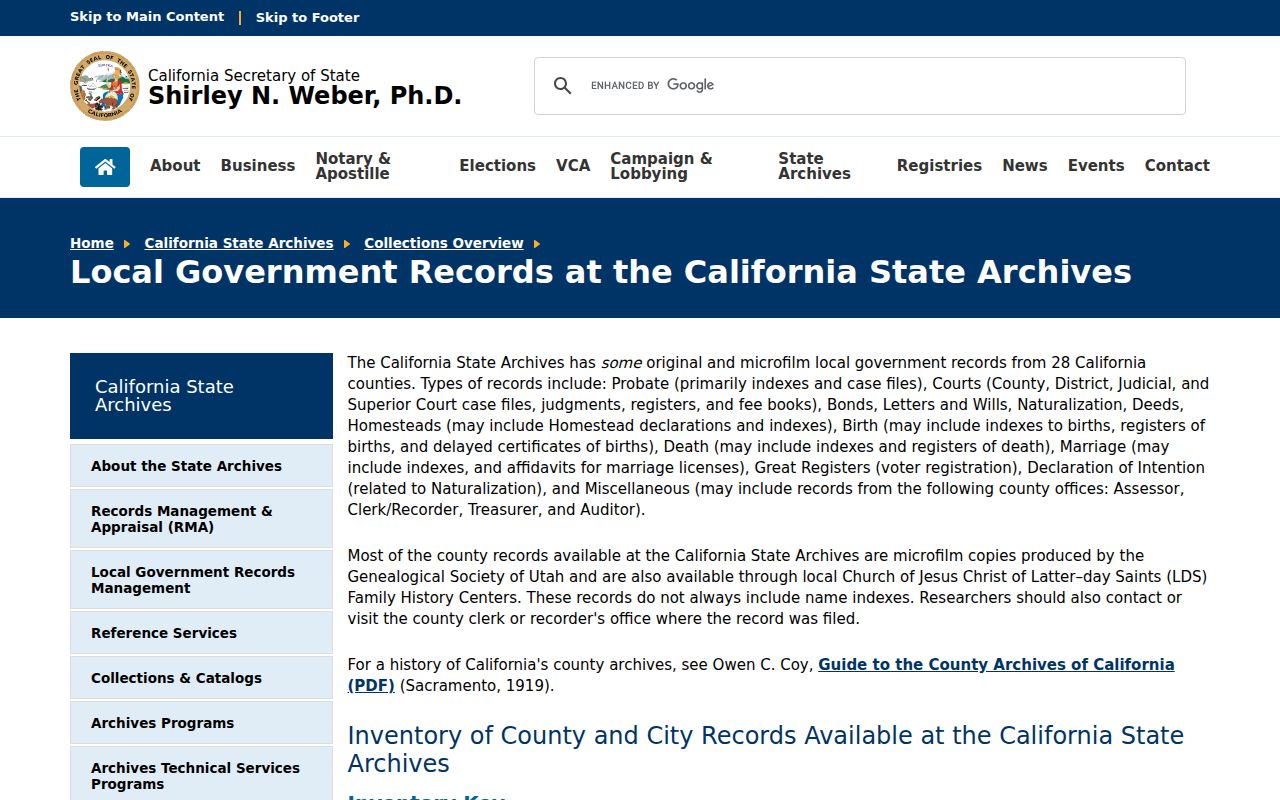
The State Archives inventory helps identify which predecessor deed, estate, homestead, or naturalization series can fill a break. A naturalization file can add a name and date; a probate or homestead file can bridge a change not shown by a sale. Cite the series, reel or item, and page when available, and do not infer household membership from a name alone.
Stanislaus County Voices Behind an Old Address
Paper trails become richer when a family or neighborhood connection can be tested against an archival collection. The Stanislaus State ArchivesSpace catalog describes people, organizations, dates, boxes, and access conditions. Its local county and city records, maps, and plans include materials saved from disposition or transferred from the McHenry Museum, so a catalog description can point to context no longer held at the originating counter.
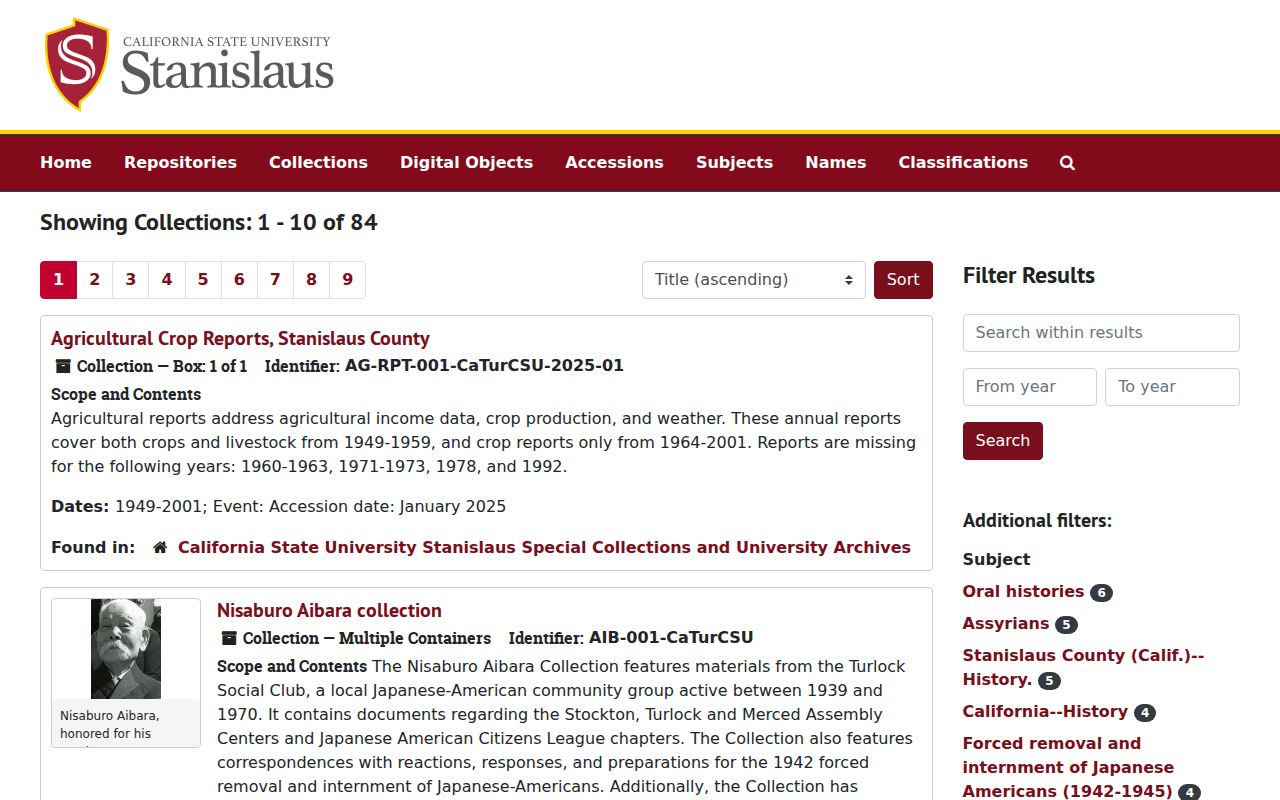
The catalog is a finding aid, not a current household list. Use a dated deed, directory, or census entry first, then use an organization record, map, school image, or community collection to test the story attached to the address.
The Stanislaus County Oral History collection contains eight boxes of interviews and transcripts dated 1957-2006. The project began with interviews in the late 1950s and includes residents such as Fred McMillan, born in the county in 1876. The collection is open for research and can add a person's own account after conventional records establish who and where.
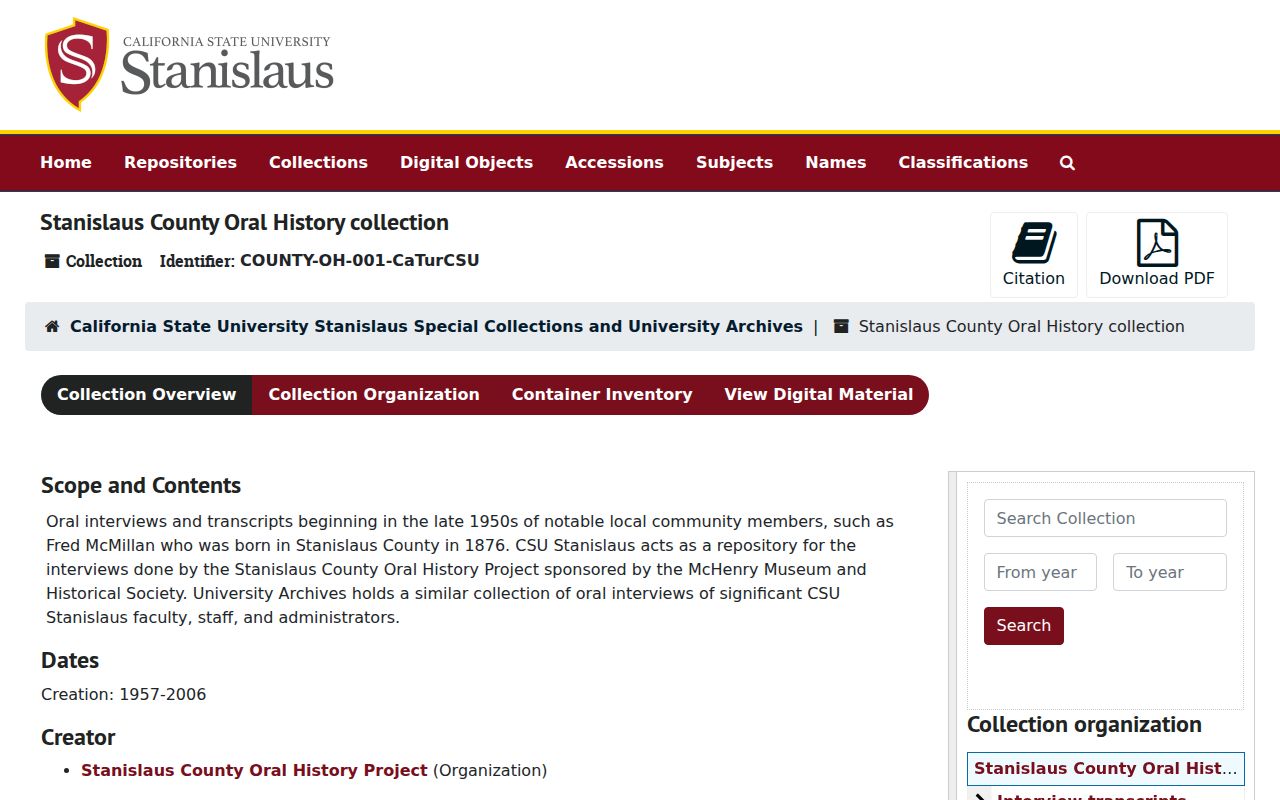
For descendants, an oral-history interview can explain a move, a former street label, or a community tie that a directory reduces to an abbreviation. Keep the interview date and collection identifier with the address record, and separate a speaker's recollection from a recorded title claim.
Note: An oral-history catalog entry identifies collection context, not a present-day address or household.
Preserving Stanislaus County House History
Preservation work is expanding the kinds of evidence available for earlier Stanislaus County households. A January 2025 award funded digitization of the Hutchings-Newsom collection, which contains more than 600 letters, official documents, and ephemera from 1813-1912, including substantial Hill's Ferry material from 1853 into the 1880s. The same annual report describes assistance to convert the 1957-2006 oral histories into preservation-friendly digital files. The Stanislaus State annual report gives the project context.
Long-term deed access also has a local funding story. A December 2025 Board of Supervisors item explains that the additional $1 recording fee continues after AB 137 removed its January 1, 2026 sunset. Stanislaus County uses the money to preserve and restore permanent records, maintain archival microfilm and digital imaging, and modernize storage and retrieval. The Board preservation item supports the fee history, but a preservation program is not a promise that every old instrument is online, complete, or legible.
Save a compact research log for each address. Record the source title, date, page or image reference, exact name spelling, APN or legal description, and the claim supported by the item. Distinguish owner, listed occupant, household member, heir, and community connection. Stop when the evidence becomes uncertain instead of forcing a familiar name into the chain. A durable house history is a set of dated claims with clear source boundaries.