
Find Stanislaus County Residents
A useful Stanislaus County residents directory search starts with the question, not with a broad name box. An address points first to a parcel and its titled owner. A court question belongs in the Superior Court party index. A birth, death, or marriage question belongs with the Clerk-Recorder or California Department of Public Health. A past household may require a city directory, census schedule, obituary, or archive. These sources overlap, but they do not carry the same facts.
Property and recorded-document results can show a legal connection to land. They do not create a complete roll of people who live there. The voter status tool verifies an individual voter and is not a public street list. Historical books reflect the names and addresses that a publisher gathered in a particular year. Treat each hit as a lead, then use a second record with a date, address, co-party, parcel, or family link before calling it the right person.
Use this starter sequence when the goal is a lawful family-history, estate, reunion, or civic record search:
- Write down the full name, spelling variants, approximate date, city or community, and any known address.
- Use GIS or an APN already in hand to locate the parcel, then read the assessor information that the public channel exposes.
- Search the recorded-document index by name, APN, date, or document number and separate grantors, grantees, liens, and releases.
- Use the court, vital, business, or license source that matches the question instead of treating one index as universal.
- Move to the library, State Archives, university collections, counter terminal, phone desk, or CPRA request channel when the web record stops.
Stanislaus County Records Offices
Four county desks do most of the work behind a Stanislaus County residents directory. The Clerk-Recorder indexes deeds, liens, maps, fictitious business names, notaries, births, deaths, and marriages. The Assessor keeps the assessment roll, parcel numbers, maps, values, exemptions, and property characteristics. Elections administers registration and lawful voter-file access. The Superior Court keeps case indexes and files for civil, criminal, family, probate, small claims, and traffic matters. City and county offices split permit and administrative records according to parcel jurisdiction.
Stanislaus County Clerk-Recorder
1021 I Street, Suite 101
Modesto, CA 95354
209-525-5250
Clerk-Recorder services
Stanislaus County Assessor
1010 10th Street, Suite 2400
Modesto, CA 95354
209-525-6461
Assessor data services
Stanislaus County Elections
1021 I Street, Suite 101
Modesto, CA 95354-2331
209-525-5200
StanVote services
The office channel matters. A free web property inquiry expects an APN, while a kiosk supplies broader public assessment fields. RecorderWorks supplies a free index, but image or copy orders follow a different process. Elections protects specified fields and limits voter data by purpose. The public index is often the start of a trail, not the final proof.
For a street-by-street parcel workflow, use the Stanislaus County street directory angle. The broader one-person record path belongs in a Stanislaus County resident lookup, where court, vital, business, and license records can be weighed together.
One practical rule keeps the office map clear: verify the parcel's city or county jurisdiction before requesting permits or code records. A Modesto postal label can cover an unincorporated county island.
Stanislaus County Clerk-Recorder services are the first office stop for recorded instruments and local certificates, but each record type still has its own access rule.
As an orientation aid, the county offices separate ownership evidence, electoral status, court events, and vital events rather than publishing one combined residents roll.
Stanislaus County Parcel Search
The assessor and GIS pairing is the best address-to-record bridge in Stanislaus County. The free Public Inquiry path asks for a parcel number in 000-000-000 format with dashes. If the APN is unknown, the county GIS viewer, map books, and parcel layers can help locate the shape and jurisdiction. Public office kiosks provide a broader assessment view during Assessor hours. A restricted Online Agency Inquiry adds name and situs searching, but the research records a $300 annual charge, login, user agreement, and demonstrated business need.
Do not confuse situs with mailing. Situs is the physical property location. Mailing is where the owner asks the Assessor to send tax correspondence. A matching address can support an owner-occupancy hypothesis, but neither field proves who lives at the parcel. A legal description and APN are stronger bridges into deeds because a street number can change while the land description remains recognizable.
| Field or control | How it works in Stanislaus County |
|---|---|
| Parcel Number | Required by free Public Inquiry; enter the county APN with dashes. |
| Name | Available through public kiosks or restricted Agency Inquiry, not the free web path. |
| Situs | Physical property address in the broader data service; it is not the tax-mailing address. |
| Search | Submits the selected parcel or authorized data-service query. |
The county GIS layer adds parcel geometry, city limits, annexations, districts, and other map context. It does not by itself supply the owner's name. Once an APN is known, RecorderWorks can connect the parcel to an indexed instrument. This separation is why an address-first search is more reliable than guessing a resident from a postal city.
See the Stanislaus County GIS viewer for the map bridge. The county's parcel map is a research aid, not a survey or title opinion.
The Assessor Public Inquiry image shows the APN-first public route.
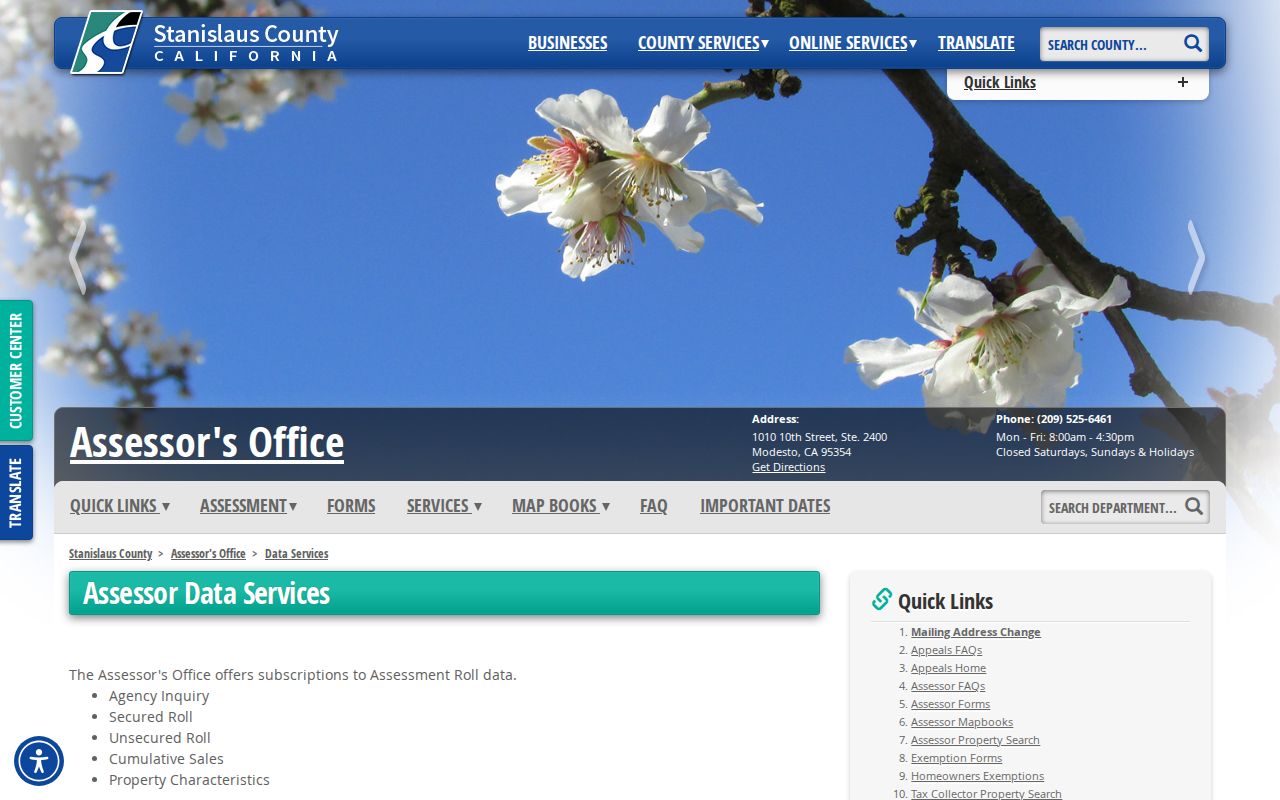
That screen is useful after GIS supplies the parcel number, while broader owner and situs searches remain tied to the office kiosk or restricted service.
That jurisdiction check is a local geography lesson: a Stanislaus County residents directory must account for nine incorporated cities, rural routes, and unincorporated communities rather than treating Modesto as the whole county.
Source context matters as much as the parcel number. Keep the query date and the exact APN beside any result because assessment data may be stale or corrected later.
Stanislaus County RecorderWorks Trail
RecorderWorks is the county's name-rich recorded-document trail. Its notice states index coverage from January 1, 1850 to the present, although Stanislaus County itself was organized in 1854. That mismatch is useful, not a typo: treat 1850 as the system's stated boundary, then inspect the document date, jurisdiction, book or map reference, and parties before assigning a result to the county. The portal supports Name, Document Number, Document Type, Map, Recording Date, Book and Page, Parcel Number, Legal Description, and Options modes.
For a resident-directory question, the strongest use is a chain. Search a known owner or APN. Open the document detail. Read the recording date, document type, indexed names, document number, and legal description. Select the prior grantor or a co-owner, then search again. A grantor is the party transferring an interest. A grantee receives it. A lien, deed of trust, or reconveyance is not the same evidence as a grant deed.
| RecorderWorks input | Useful format | What it narrows |
|---|---|---|
| Person or business name | LAST NAME, then partial first name; partial matching is available | Indexed party and related instruments |
| Recording date | MM/DD/YYYY range; broad searches can time out | Chronology and likely transfer window |
| APN or legal description | Parcel-linked or land-description mode | Same-name separation and parcel continuity |
| Document type or number | Specific instrument or annual number | Deed, lien, map, release, or other filing |
The county image captured for RecorderWorks Official Records shows the same public index entry point used to begin a Stanislaus County residents directory trail.
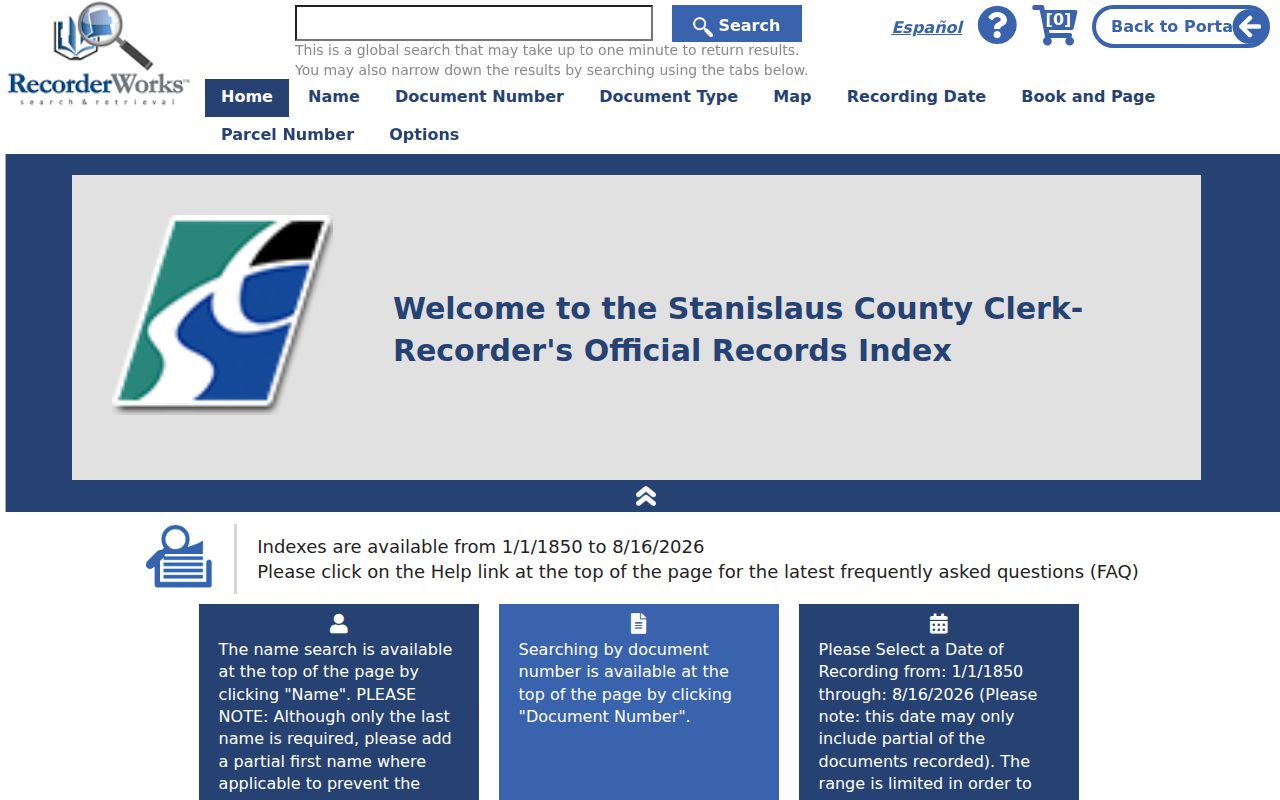
Use the indexed party as a clue, then inspect the instrument and parcel. The image or certified copy can answer a document question that a name-only hit cannot.
RecorderWorks can establish that a named party appears in an instrument. It cannot establish present occupancy without independent evidence. This is the central difference between a record trail and a resident roll.
Current Stanislaus County Directories
Current sources overlap in a local directory, but each lists a different population. The Assessor identifies parcels and owners through its permitted channels. RecorderWorks identifies parties to instruments. The voter status service authenticates an individual voter. A city staff directory identifies public business contacts. A license or business filing connects a person to an organization or professional record. None should be presented as a complete household list.
| Source | Population or record | Custodian | Access character |
|---|---|---|---|
| Assessment and parcel data | Owners, situs, values, exemptions, characteristics | County Assessor | APN web inquiry, kiosk, or restricted product |
| Recorded-document index | Grantors, grantees, liens, maps, releases | Clerk-Recorder | Free index; copies follow order rules |
| Voter status | One voter's registration and election details | California Secretary of State | Self-authentication, not a name directory |
| Business and license records | Entities, agents, registrants, license status | California agencies and county Clerk-Recorder | Public search with record-specific limits |
| Municipal staff directory | Official city names, titles, and work contacts | City of Modesto | Public business directory, not private resident data |
The right question determines the right source. An estate search needs probate and recorded transfers. A former classmate search may begin with yearbooks and a school collection. A current professional affiliation may be tested against a state license record. A parcel question belongs with GIS, the Assessor, and deeds. Treat source scope as part of the evidence.
A directory can be official without being comprehensive. The gaps are meaningful: people not named in a deed, people whose voter record is confidential, household members who do not own land, and historical residents outside a publication year remain outside the matching table.
Stanislaus County Voter Records
California's voter status tool has a narrow role in a Stanislaus County residents directory. It asks the voter to authenticate with first name, last name, date of birth, and a California driver license or ID number or the last four numbers of a Social Security number. The result can show registration status, party and language preference, vote-by-mail or provisional-ballot status, polling place, election information, county contact, and guide-delivery preference. It is built for self-verification, not for browsing names on a street.
A formal voter-file request is a separate channel. Elections Code section 2194 limits use to election, scholarly, journalistic, political, or qualifying governmental purposes. Government Code section 7924.000 protects home street address, telephone, email, specified identifiers, signature, and related registration fields. Confidential registrants remain excluded except for narrow approved access. Do not infer a household from a registration result or treat a missing result as proof that a person has left.
| Voter field | Public status or authorized file |
|---|---|
| Name and date of birth | Used for self-authentication; date of birth is in approved voter-file data, not an open web directory. |
| Registration and precinct | May appear in an authorized file with purpose and security controls. |
| Participation history | Optional election/date/method information; never ballot choices. |
| License, ID, SSN, signature | Excluded from released files under the statutory rules. |
The Stanislaus County Elections image illustrates the authenticated status path rather than a public resident directory.
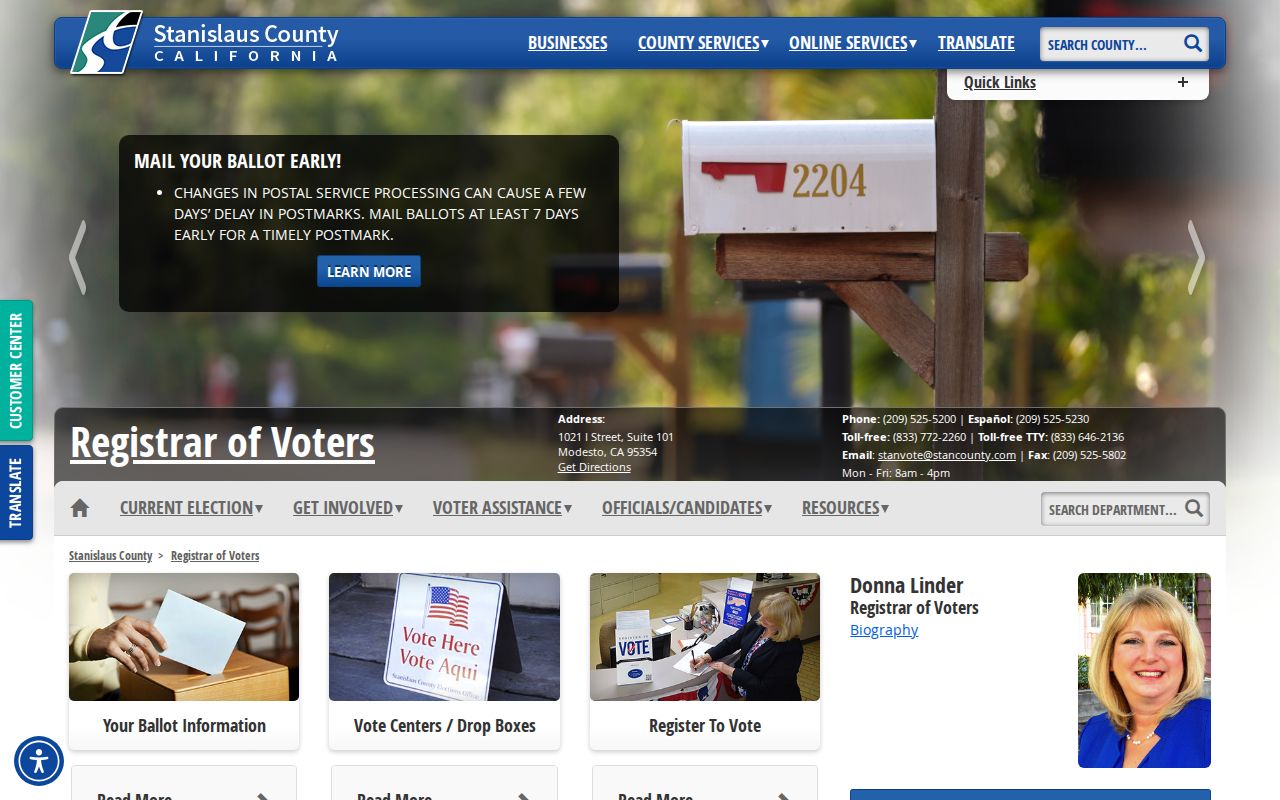
Use the tool for the voter who is checking their own record. For historical research, ask the State Archives or County Elections office about a dated register and its access rule.
Stanislaus County Court Leads
A court name search and a vital-record request answer different questions. The Stanislaus Superior Court public portal accepts a case number, first name, last name, or business name. A public result may show a case number, party or case name, case type, filing information, status, and docket or hearing events where permitted. A docket is the court's chronological event record. It is a finding aid, not a verdict. Sealed, juvenile, adoption, and protected family material may be hidden, and courthouse access can be broader than remote access.
The Clerk-Recorder and California vital-records program use authorized-copy and informational-copy rules for births, deaths, and public marriages. An informational copy can confirm a lead but cannot establish identity. An authorized copy requires a qualifying relationship or role and, for mailed requests, a notarized sworn statement. The January 1, 2026 county fee notice lists $34 for birth, $28 for death, and $19 for marriage certificates. Divorce decrees remain with Superior Court; CDPH's certificate of record is not the decree.
| Question | Best record lead | What to verify |
|---|---|---|
| Was a case filed? | Stanislaus Superior Court public index | Party identity, case type, status, disposition, and access limits |
| Did a vital event occur? | County Clerk-Recorder or CDPH | Event date/place, copy type, eligibility, and current fee |
| What is the official file? | Clerk copy request or research form | Case number, filing year, delivery choice, page and certification charges |
The Stanislaus Superior Court case search image shows the public entry point. A court match needs its disposition and context before it becomes part of a resident identity check.
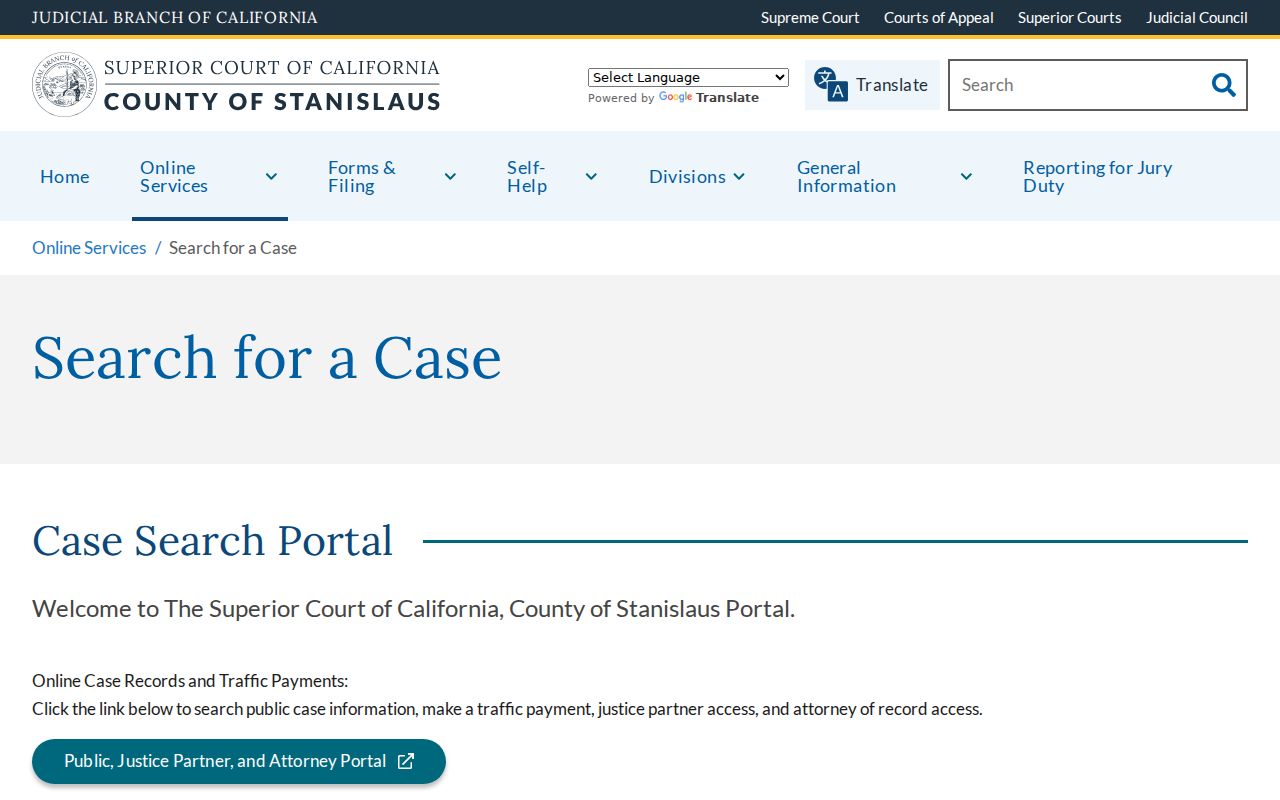
For a certificate, use the current form and custodian. A name in an index is not the same as a certified copy accepted for identity purposes.
Stanislaus County Identity Cross-Checks
Business and professional records can separate people who share a name. California's bizfile search can connect an entity to a file number, status, formation date, agent, principal address, and filed statements. County fictitious business name records add a local registrant trail, but the Clerk-Recorder warns that duplicate or similar names may be filed because the office does not perform uniqueness searches for filers. A state license search may add license type, status, issue or expiration details, and public discipline where the board publishes them.
These records are useful when a person is known by a business role, occupation, or organization. They are not home-address proof. An agent for service of process has a service address. A facility inspection identifies an establishment. A trade name identifies a filing. Pair the result with a parcel, court, deed, date, or archive source. For a historic name, try the spelling printed in the source, then variants, especially when a community collection records multiple transliterations.
| Cross-check | Useful fields | Limit |
|---|---|---|
| State entity filing | Entity name, status, dates, agent, officers or managers in filed statements | Entity or agent address is not proof of residence |
| County fictitious business name | Registrant, trade name, filing and renewal dates | Similar names can coexist |
| DCA or board license | Name, license number, type, status, city or county filters | Only participating boards and published fields apply |
The California bizfile business search and DCA license search are strongest as independent role or date anchors. A current filing can test whether two records refer to one person, but it cannot turn a work contact into a private resident list.
Stanislaus County's FBN warning adds a consumer-safety lesson. An official-looking renewal letter can copy public filing facts and demand $169. Verify through the Clerk-Recorder before paying or sharing more information.
Stanislaus County Privacy Rules
A responsible Stanislaus County residents directory uses the least detail needed for a lawful question. California's Safe at Home program supplies a substitute mailing address and confidential voter-registration route for eligible participants. A protected address may be absent or mismatched by design. Recorded deeds remain public, but voter home addresses, DMV personal information, signatures, and other protected identifiers are not open directory fields.
California's Delete Request and Opt-out Platform, known as DROP, launched in 2026 for consumer requests to data brokers. It lets a verified California resident submit identifying information, receive a request ID, track outcomes, and have participating brokers revisit lists on the program's schedule. An opt-out affects a compiler's copy. It does not erase a deed, court filing, assessment record, or vital record held by the lawful custodian.
Lawful personal research. Public records may support family history, estate work, reconnection, or civic review. Do not publish a protected address, threaten a person, or use a record to stalk, harass, intimidate, or harm anyone.
For the state privacy routes, use Safe at Home for address confidentiality and California DROP for data-broker requests. Correct factual errors with the original custodian and suppress a commercial copy separately.
The California Public Records Act, Government Code sections 7920.000 through 7931.000, is a fallback for an identifiable existing county or city record. It does not require an office to create a resident list, answer a research question, or disclose a record protected by another law. The California public-records statute is the starting point for a focused request.
Offline Stanislaus County Sources
Web indexes are only one access channel. The Modesto Library's Special Collections holds genealogy, local history, older high-school yearbooks, non-current telephone directories, and city directories described as dating to 1914. The materials do not circulate. During the 2026 main-library renovation, service and retrieval conditions can change, so call the Reference Desk before traveling. The State Archives and Family History Centers hold microfilmed county series, including early deeds, probate, naturalization, marriages, births, homesteads, and declarations of intention.
University archives add a different kind of resident evidence. The Stanislaus County Oral History collection contains eight boxes of interviews and transcripts from 1957 through 2006. Oral testimony can explain a move, a family tie, a former street name, or a community role that a deed only hints at. The catalog also holds maps and county documents saved from disposition. Use an archive description as a finding aid and ask the repository about access conditions.
The Stanislaus County Library local-history page is the best first contact for its physical collections.
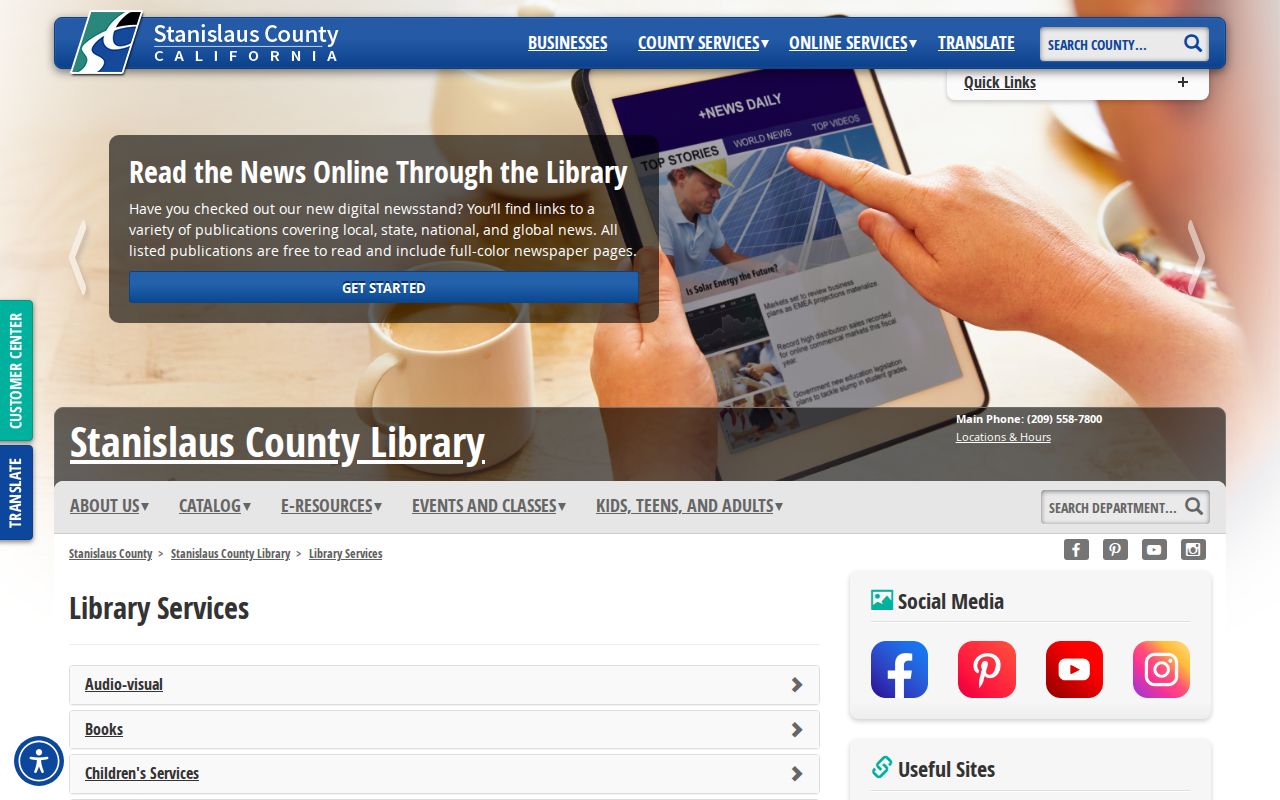
The library source shows the public service doorway. A reference request can identify a directory year or newspaper run that a general web search misses.
For older county series, the California State Archives catalog supplies the archival route.
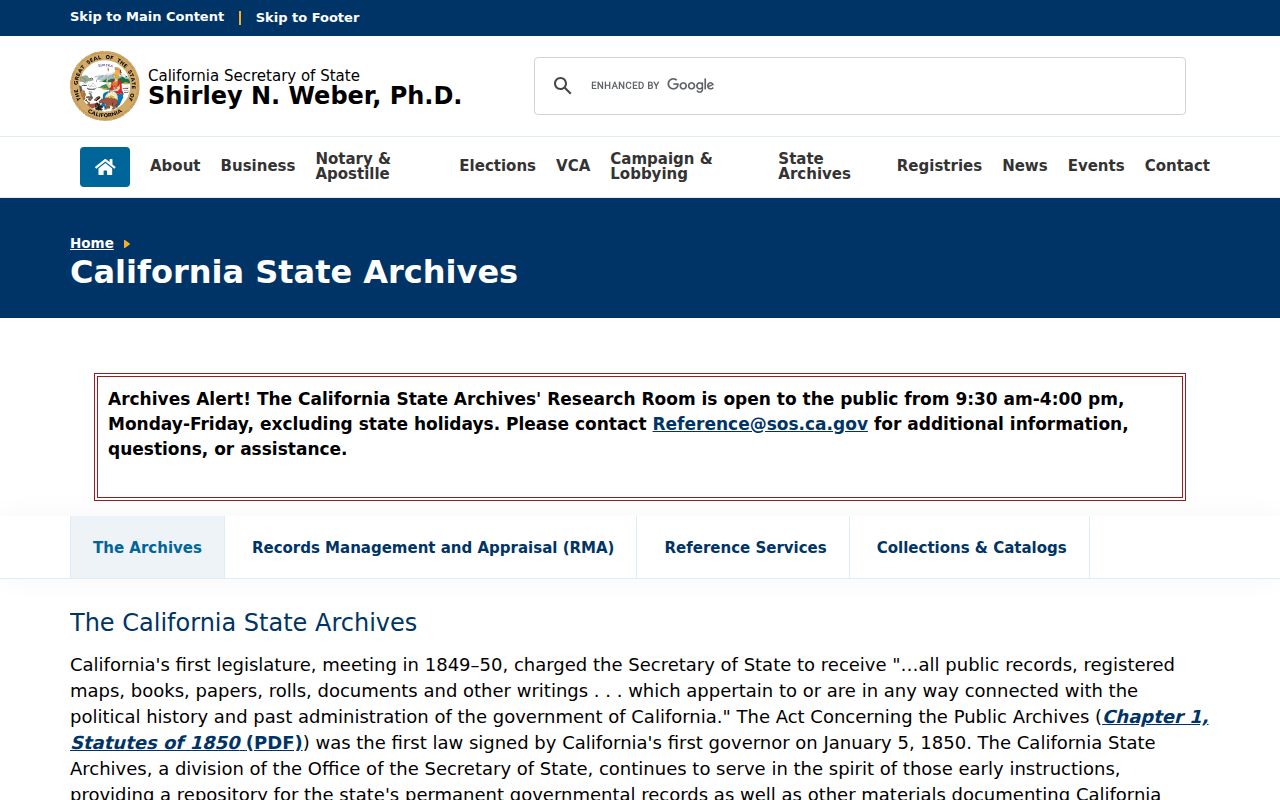
Archives and library shelves fill different gaps. One preserves government series and microfilm; the other supplies local books, directories, newspapers, and staff knowledge.
Stanislaus County Records History
Record geography changes the way old names should be read. Stanislaus County moved its county seat five times between 1854 and 1871: Adamsville, Empire City, La Grange, Knights Ferry, and Modesto. An early court or administrative reference to one of the first four places is a jurisdiction clue, not a bad address. A family may remain in the same broad county while the court, post office, newspaper, and directory label changes.
In 1939, the county built a Hall of Records for $200,000, with the court history reporting completion in 60 days. Modern preservation continues the same custody story. A $1 additional recording fee supports permanent-record preservation, archival microfilm, digital imaging, and storage work. AB 137 removed the January 1, 2026 sunset, keeping the fee in place. That funding line helps explain why old deed images and indexes can still be connected to present searches.
- 1854: the county forms and Adamsville wins the first county-seat vote.
- 1854-1871: the seat moves through Empire City, La Grange, and Knights Ferry before Modesto.
- 1939: the Hall of Records gives permanent custody a dedicated building.
- 2025-2026: preservation funding and digitization projects extend access to old records and oral histories.
The history is practical. It tells a researcher where to look when a modern office has no matching early label, and why an archive or university repository may hold a record that once sat in a county office.
Historical Stanislaus County Directories
The historical Stanislaus County residents directory is a shelf, not a single database. Modesto Library Special Collections has city and telephone directories, older yearbooks, local-history books, newspapers, and genealogy aids. Descriptions place some government and directory material as far back as 1914, but the public catalog does not establish an uninterrupted run, publisher list, or complete reverse-directory series. Ask for the exact volume and verify whether a street section exists.
A typical directory entry may pair a surname and given name with a spouse or widow notation, occupation, street address, and a code such as h for householder, r for rooms or residence, bds for boards, or wid for widow. The key in the actual volume controls. An address or criss-cross section reverses the order and can reveal nearby listed households. Absence from one year is a gap, not proof of absence.
Pair a directory year with the nearest deed, census, newspaper, obituary, or school source. The Stanislaus County city directory book has its own deeper treatment, including how to read an entry and trace a household.
Printed books also preserve the county's community range. Turlock Assyrian oral histories, school collections, and county-town materials can add names and context that a city directory compresses into one line. A careful Stanislaus County residents directory search preserves the spelling in the source, then tests variants with date and address anchors.
That final combination is the point of the directory: it offers a time-stamped address and household clue, while deeds, courts, certificates, and archives supply the records needed to test what the line means.